Pigment Blue 60: Properties, Applications, and Buying Guide for Industrial Buyers
Selecting the right blue pigment is an important decision for manufacturers that need consistent color, dependable processing performance, and reliable product quality. In industrial color production, the choice of pigment can influence not only the final shade but also formulation efficiency, durability, and manufacturing costs.
Pigment Blue 60 is an organic blue pigment that buyers may consider for applications requiring specific color characteristics and performance properties. For coatings producers, plastics manufacturers, printing ink formulators, and pigment distributors, understanding its technical characteristics is an essential step before selecting a commercial grade.
This guide explains the identity and key properties of Pigment Blue 60, discusses important application considerations, and outlines how to evaluate pigment suppliers for long-term business cooperation.
What Is Pigment Blue 60?
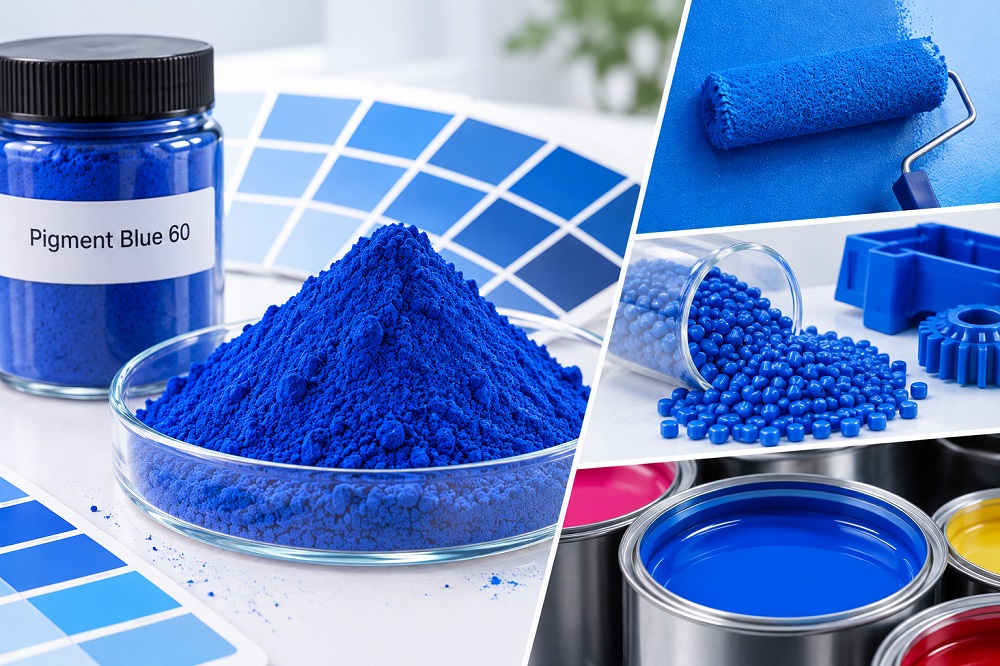
Pigment Blue 60, commonly abbreviated as PB60, is an organic pigment belonging to the anthraquinone pigment family. It is associated with deep blue color shades and is used in selected industrial coloration applications.
Like other organic pigments, its suitability depends on more than its chemical classification. Commercial performance can vary according to grade, particle characteristics, dispersion, formulation, and manufacturing conditions. Buyers should therefore evaluate the specific product against their own technical requirements rather than relying on a general description.
For industrial procurement teams, the first step is to establish the required color shade, application method, durability expectations, and applicable technical standards. These requirements provide a practical basis for comparing available grades and suppliers.
Key Properties to Evaluate
Color Shade and Strength
Color consistency is a priority for manufacturers producing repeated batches of coatings, plastics, or inks. Variations in shade or color strength can result in additional formulation adjustments, rejected products, or unnecessary material consumption.
When assessing a proposed grade, buyers should compare its color development against an approved reference standard. Testing should use consistent pigment concentrations and application conditions so that differences between samples can be evaluated accurately.
For recurring orders, an agreed color specification and batch acceptance procedure can help maintain consistency across production runs.
Lightfastness and Weatherability
Products exposed to sunlight or outdoor environments may require pigments with appropriate resistance to light-induced fading and weather-related color changes. These requirements are particularly relevant to exterior coatings and other products expected to retain their appearance during service.
The actual lightfastness and weather resistance of a commercial grade should be confirmed through technical documentation and application-specific testing. Pigment concentration, binder selection, substrate, and environmental exposure can all affect the final result.
Buyers should request test data relevant to the intended application instead of assuming that all grades offer the same level of durability.
Heat Resistance and Processing Conditions
Heat stability is an important consideration when pigments are used in plastics and other manufacturing processes involving elevated temperatures. Processing temperature, residence time, polymer type, and mechanical conditions may influence color development and pigment performance.
Before selecting a grade for a polymer application, manufacturers should confirm its recommended processing range with the supplier. Trial runs can help identify possible color changes or compatibility issues before commercial production begins.
Dispersion and Formulation Compatibility
Effective dispersion is necessary for achieving uniform color throughout a finished material. Inadequate dispersion may lead to uneven appearance, visible particles, or other defects that affect product quality.
Compatibility should be evaluated in the actual formulation, whether the pigment will be incorporated into a coating resin, a plastic compound, or an ink vehicle. The choice of dispersing equipment, additives, and processing method can influence the final performance.
Industrial Applications of Pigment Blue 60
Coatings and Surface Finishes
Coatings manufacturers select blue pigments according to shade requirements, formulation compatibility, durability expectations, and cost targets. Pigment Blue 60 may be evaluated for suitable coating systems when its color and technical performance meet the requirements of the finished product.
Before approving a grade, formulators should assess dispersion behavior, color strength, compatibility with the selected binder, and the required resistance to light or environmental exposure. Testing in the actual coating system is recommended, especially for applications with demanding performance standards.
Plastics and Polymer Coloring
Plastic manufacturers need colorants that perform consistently within their chosen polymers and production processes. Pigment selection can influence the appearance of molded or extruded products as well as the efficiency of production.
For potential applications involving Pigment Blue 60, buyers should evaluate thermal stability, polymer compatibility, dispersion, and the required shade. The suitability of a grade should be confirmed for the specific resin and processing conditions rather than assumed across all plastics.
Laboratory testing followed by a production trial can help manufacturers verify color performance before placing a large order.
Printing Inks
Printing ink formulators consider color strength, dispersion quality, compatibility with the ink vehicle, and the performance of the printed image. The selected pigment must also meet the requirements of the printing process and the intended substrate.
When assessing this material for ink formulations, manufacturers should consider viscosity behavior, transparency or opacity requirements, drying conditions, and resistance to light exposure. Application-specific tests are necessary to establish whether the grade is suitable for the intended ink system.
Specialty Color Formulations
Specialty manufacturers may evaluate organic blue pigments for other formulations requiring defined shade and performance characteristics. The decision should be based on technical requirements, regulatory considerations, and the economics of the finished product.
Where the application is highly specialized, providing the supplier with detailed formulation requirements can help narrow the available options and reduce unnecessary testing.
How to Choose the Right Blue Pigment
Not every blue pigment provides the same balance of shade, durability, processing stability, and cost. Buyers should compare candidates according to the performance requirements of the final product rather than choosing solely by pigment name or initial price.
Define the Required Performance
Start by identifying the application, substrate, processing conditions, target shade, and expected service environment. A pigment used in indoor plastic components may have different requirements from one intended for outdoor coatings or printed materials.
A written specification gives suppliers a clear basis for recommending an appropriate grade and helps procurement teams compare quotations more accurately.
Review Technical Data
Request the technical data sheet (TDS) and safety data sheet (SDS) for the specific product. Depending on the application, relevant information may include color strength, heat resistance, lightfastness, weather resistance, dispersion characteristics, and recommended processing conditions.
Check the test methods and conditions used to generate performance data. Values measured using different methods may not be directly comparable, so buyers should confirm that the information is relevant to their intended use.
Test Samples Before Bulk Purchasing
Sample evaluation helps manufacturers confirm whether a pigment meets their color and processing requirements. Testing should be performed using the intended formulation
Kaugnay na Mga Produkto
 Pigment Yellow 139: Properties, Applications, and Buying Guide for Industrial Buyers
- Pigment Yellow 110: Properties, Applications, and Buying Guide for Industrial Manufacturers
- Pigment Yellow 97: Properties, Applications, and Technical Guide
- Pigment Red 177 Technical Data: Heat Resistance, Light Fastness, and Chemical Stability
- Pigment Red 177 Buying Guide: Everything Importers Need to Know Before Purchasing
- Pigment Red 177 vs Pigment Red 170: Which Organic Red Pigment Should You Choose?
- Pigment Red 146: Properties, Applications, and Technical Guide
- Why Pigment Red 177 Is Ideal for Plastic Coloration and Masterbatch Manufacturing
- What Is Pigment Red 146 and Where Is It Used?
- How to Choose a Reliable Pigment Red 177 Manufacturer in China